
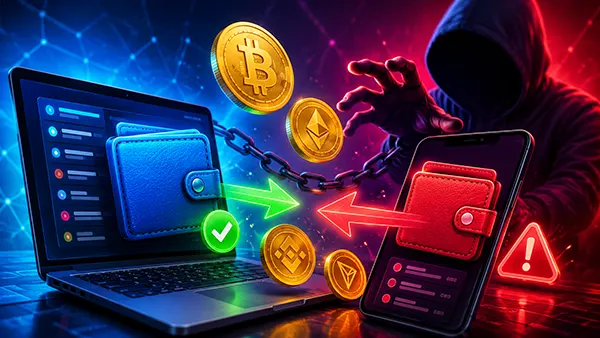
Address Poisoning: How Fraudsters Replace Crypto Addresses Without Your Knowledge
Cryptocurrency transactions are built around wallet addresses that consist of long combinations of letters and numbers. Most users cannot memorise these strings, which is why many rely on copying, saving, or checking only the first and last characters before sending funds. Cybercriminals actively exploit this habit through a method known as address poisoning. This form of fraud has become increasingly common in 2025 and 2026, especially across Ethereum, BNB Chain, Tron, and Bitcoin networks. Attackers manipulate transaction histories and wallet interactions to trick users into sending digital assets to fraudulent addresses that appear legitimate at first glance.
How Address Poisoning Attacks Work in Modern Crypto Networks
Address poisoning is based on deception rather than direct hacking. Fraudsters create wallet addresses that visually resemble a victim’s frequently used address. In many cases, the fake address contains identical opening and closing characters, making it appear genuine during quick verification. Attackers then send small amounts of cryptocurrency or worthless tokens to the target wallet so the fraudulent address appears inside the transaction history.
Once the poisoned address becomes visible in the wallet’s recent activity, the attacker relies on user behaviour. Many crypto holders copy addresses directly from previous transactions instead of checking the full wallet string. If the victim accidentally copies the malicious address and sends funds to it, the transfer becomes irreversible. Because blockchain transactions cannot usually be cancelled, stolen assets are often impossible to recover.
In 2026, address poisoning schemes have evolved beyond simple token transfers. Some attackers now use smart contracts, fake NFT airdrops, and automated bots that scan public blockchain activity. These tools help criminals identify active wallets and generate convincing address copies more efficiently. Reports from blockchain security companies such as Chainalysis and CertiK have shown a steady increase in poisoning attacks targeting both retail users and businesses managing large crypto reserves.
Why Wallet Interfaces Make Address Poisoning More Dangerous
Many cryptocurrency wallets still display shortened versions of addresses by default. Instead of showing the entire wallet string, interfaces often present only several characters at the beginning and end. Although this design improves readability, it also creates an opportunity for scammers to imitate legitimate addresses with high visual similarity.
Mobile wallet applications create additional risks because smaller screens limit the amount of information users can verify comfortably. Some applications also prioritise recent transaction history, encouraging quick copying behaviour. Fraudsters understand these habits and intentionally target users who perform frequent transfers between exchanges, DeFi services, and personal wallets.
Another issue involves fake token names and counterfeit transaction notifications. Some poisoning attacks are combined with misleading messages designed to imitate exchange activity or staking rewards. Victims may believe the transaction originated from a trusted source when, in reality, the address was generated specifically for fraud. Security analysts in 2026 continue to warn that interface design flaws remain one of the largest contributors to successful crypto scams.
Real Risks and Financial Consequences of Address Poisoning
The financial damage caused by address poisoning can be substantial. Unlike phishing websites that often target passwords or seed phrases, poisoning attacks exploit ordinary transaction behaviour. Even experienced users can become victims when handling multiple transfers under time pressure. A single mistaken transfer may result in the permanent loss of thousands of pounds or more in digital assets.
Blockchain analysis firms recorded multiple high-profile incidents during 2025 and early 2026 involving six-figure and seven-figure losses linked to poisoned wallet addresses. In several documented cases, attackers waited weeks or months before victims accidentally reused the fake address. This long-term strategy makes the fraud difficult to detect because the malicious transaction initially appears harmless.
Businesses accepting cryptocurrency payments face additional operational risks. If employees reuse wallet addresses from transaction logs without proper verification procedures, company funds may be redirected to attackers. Crypto payment processors, NFT traders, OTC desks, and decentralised finance users are considered especially vulnerable because they conduct large volumes of blockchain transactions daily.
How Fraudsters Select and Target Victims
Most poisoning attacks rely on publicly available blockchain information. Attackers monitor wallets with frequent activity and analyse transaction patterns to identify addresses that are repeatedly used. Automated software can then generate visually similar wallet combinations designed to confuse the target during future transfers.
Whales and publicly visible wallets attract particular attention because criminals assume these addresses handle significant asset volumes. However, smaller retail investors are also common targets. Fraudsters often pursue large-scale campaigns where thousands of wallets receive poisoned transactions simultaneously in the hope that a small percentage of users will eventually make a mistake.
Social engineering techniques are increasingly combined with address poisoning in 2026. Some attackers contact victims through Telegram, Discord, X, or email while pretending to represent support teams or crypto projects. Their goal is to encourage the user to verify or reuse a poisoned address that already appears familiar inside the wallet history. This combination of technical manipulation and psychological pressure significantly increases the success rate of modern crypto scams.
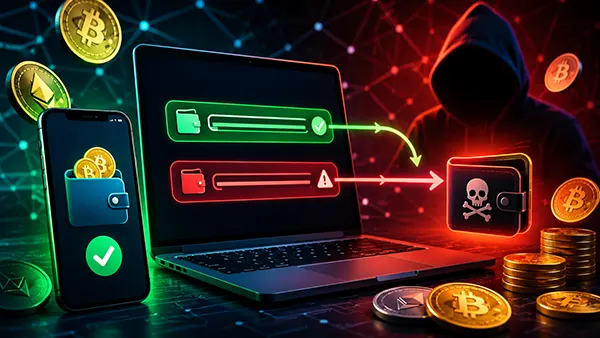
Practical Ways to Protect Cryptocurrency Assets From Address Poisoning
The most effective protection against address poisoning is careful address verification before every transaction. Users should never rely solely on the first and last characters of a wallet string. Even though checking the complete address may seem inconvenient, this habit dramatically reduces the risk of sending funds to fraudulent wallets.
Using address books inside trusted wallets and exchanges can also improve security. Saving verified addresses under clearly labelled contacts helps reduce dependence on transaction history. Hardware wallets provide additional protection because they display the full recipient address directly on the device screen before confirming a transfer.
Security awareness has become increasingly important as poisoning attacks grow more sophisticated. Users should treat unexpected token transfers, suspicious NFTs, and unknown wallet interactions cautiously. Blockchain security firms continue to recommend avoiding direct interaction with unfamiliar smart contracts and regularly updating wallet software to benefit from the latest security improvements.
Best Security Habits for Crypto Users in 2026
Two-factor authentication remains essential for exchange accounts and wallet management services. Although 2FA cannot stop address poisoning directly, it reduces exposure to broader account compromise attempts often connected to crypto fraud campaigns. Password managers and encrypted backups also help prevent secondary attacks targeting wallet credentials.
Test transactions are another important safety measure for larger transfers. Sending a small amount first allows users to confirm that the destination address is correct before transferring substantial sums. Institutional investors and businesses increasingly implement multi-person verification systems where several team members confirm recipient details before approving blockchain transactions.
Education continues to play a major role in reducing crypto-related fraud. As blockchain adoption expands across finance, gaming, and online commerce, attackers constantly adapt their methods to exploit user habits. Understanding how address poisoning operates gives cryptocurrency holders a stronger ability to recognise suspicious activity early and avoid irreversible financial losses.
Similar articles
-
 Freezing USDT and USDC: How Stablecoin Blacklis...
USDT and USDC are often treated as the practical equivalent …
-
 How blockchain makes the gambling market transp...
The gambling market continues to expand, with online casino products …
-
 Chain Abstraction in Crypto Casinos: Depositing...
Crypto deposits have traditionally required players to understand more about …
-
 Meet Yearn Finance
Yearn Finance represents a significant evolution in the decentralized finance …